Multi-Agent Claude Code Starter Kit
A four-agent team for Claude Code that hands work between Designer, Engineer, Reviewer, and Marketer
TL;DR
Tincture built and shipped the Multi-Agent Claude Code Starter Kit, a four-agent Claude Code team (Designer, Engineer, Reviewer, Marketer) that hands work between each other inside one conversation, with four context files that any project can fill in to ship work through the team. Free download. The kit productizes the specialist-agent pattern into a starting point that drops into any project, replacing the "single Claude conversation trying to be everything" failure mode with structured handoffs between scoped agents.
The brief
What did the client need?
Most attempts to "use Claude to build a thing" run into the same wall: one conversation, one context window, one prompt trying to handle every role. The model is asked to design the thing, build it, review the build, and write the marketing copy, all in the same chat. The output is competent at all of those and great at none of them. The conversation drifts. The reviewer instinct loses to the builder instinct because they share the same prompt.
The fix that works is specialist agents. Different system prompts for different roles. Handoffs between them. Each agent doing its job, none of them trying to do everyone else's. The Bull Family Life OS proved the pattern at the household level (six agents, one Slack workspace). The brief was to take the same pattern and ship it as a starter kit anyone can drop into a project.
The deeper version of the brief: lower the bar for specialist-agent setups. Most builders don't have time to architect the routing, the system prompts, and the handoff logic from scratch. Give them the architecture and the templates, leave the project-specific context for them to fill in.
The constraints
What made this hard?
The first was scope discipline. The kit had to ship as a standalone download that runs without modification, but also be customizable enough that a builder could specialize it for a real project. That's a tension between "works out of the box" and "actually useful for your specific work". The compromise: four agents covering the universal roles (Designer, Engineer, Reviewer, Marketer), four context files that the user fills in for project-specific knowledge.
The second was the pedagogy problem. Most builders haven't worked with multi-agent setups before. The kit had to teach the pattern as much as deliver the tool. Documentation written for someone who's never split a single conversation into multiple specialist roles, with examples of when each agent runs, when they hand off, and what the handoffs look like in practice.
The approach
How was the problem framed?
Four agents, four context files, one Claude conversation. Designer thinks about what the thing should be and how it should feel. Engineer builds the thing. Reviewer pressure-tests the build before it ships. Marketer figures out how to talk about it. Each agent has its own scoped system prompt; the user invokes them deliberately by name in the conversation.
The four context files are where project-specific knowledge lives. Brand context (what the project is, who it's for, the voice). Technical context (the stack, the constraints, the conventions). Review context (what good looks like, what's been rejected before, the standards). Marketing context (the audience, the channels, the message). The agents read from these files; the user fills them in once per project.
Distribution is download-and-go. Free zip, public link, drop into a Claude Code project, fill in the four files, start working. No SaaS layer, no auth, no subscription. The kit is the work; the only ongoing cost is the user's own Claude usage.
The build
What was shipped?
A downloadable kit (free) containing the four agent system prompts, the four context file templates, install instructions, and example workflows. Tagged for Claude Code and Claude.ai compatibility. Zip file under 1MB.
A companion content layer: insight pieces explaining the specialist-agent pattern, the Claude Opus 4.7 use cases that benefit most from multi-agent setups, and the trade-offs against single-agent approaches. The content does the teaching; the kit does the shipping.
The outcome
What were the results?
Live and free to download. The kit replaces the single-agent default for builders who have run into the "one conversation trying to do everything" failure mode. The pattern, once seen, is hard to unsee; most builders who use the kit specialize their agents further within a few weeks.
The structural outcome is occupying surface area in a discipline that didn't have a free starting point. Most agent frameworks are heavyweight and require commitment to a stack. The Multi-Agent Starter Kit is the lightest possible introduction to the pattern: four files, one Claude conversation, no framework.
What it took
What tools and methods were used?
Claude API and Claude Code as the runtime. Markdown for the system prompts and context files. Distributed on GitHub or Download.
The methodological underpinning is the practice's pattern for multi-agent design: specialize by role, share toolbox, route by intent
The takeaway
What's the transferable principle?
Most builders running into Claude limits aren't running into model limits. They're running into single-agent limits. One conversation trying to be Designer and Engineer and Reviewer and Marketer ends up doing each of those badly. Specialist agents, scoped system prompts, deliberate handoffs. The model is the same; the architecture is different.
For the Starter Kit, that meant shipping the four universal roles as templates with project-specific context files for everything else. For a different builder, the agents change but the pattern doesn't. Specialist routing always beats single-agent.
Read more on this in Claude Opus 4.7: What It Means for Founders
Frequently asked questions

More like this
 Featured
12 agents, ~10 issues/day, ~4 hours saved daily, cost = Claude subscription + ~$100/month VM
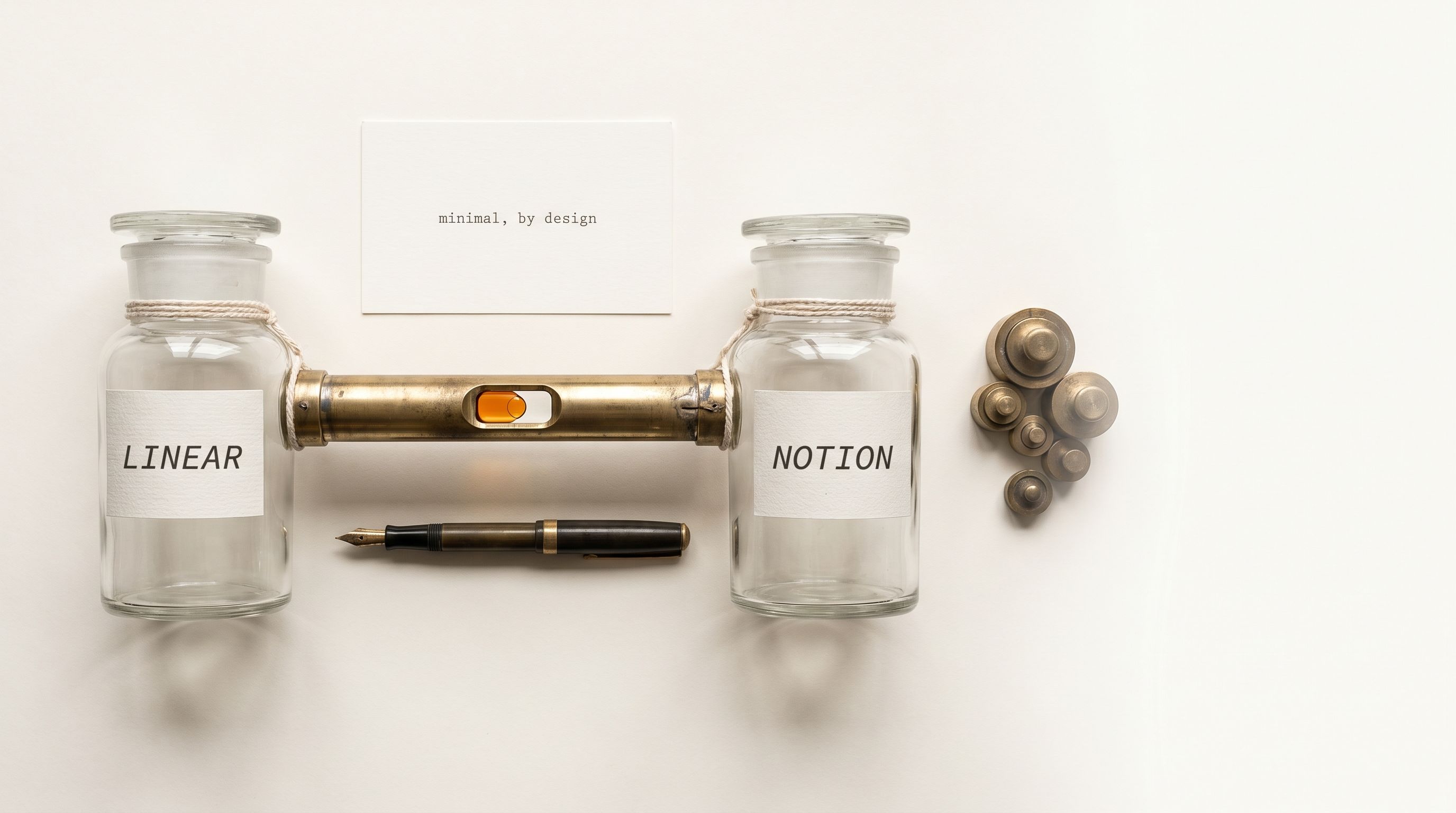
A 12 agent ↔ Linear ↔ Notion setup
The Operating layer was wired to Linear and Notion, paired via MCP, so each specialist agent could ship from Linear and mirror state into Notion against its per-persona write contract, with identity that survives across sessions. Stand-up took about 2.5 working days of focused build, over a week of elapsed time. Steady state: 12 agents working roughly 10 issues or tasks a day, about 4 hours of time saved daily plus the context-rebuilding tax that doesn't show up on a clock. The whole thing runs on a Hetzner VM in Helsinki, so agents pick up Linear comments and project emails whether the laptop is open or not. Cost is the Claude subscription plus about $100 a month for the VM.

From a spreadsheet that captured zero leads to a live tool that captures every completion.
An Excel audit, rebuilt as an AI lead engine
Tincture helped a UK consultancy that builds AI tools for a regulated professional-services sector turn a five-sheet Excel self-assessment into a gamified web tool, delivering a live lead engine built to qualify a 25,000-practice cold campaign. The old audit read like a compliance form and captured nobody. We rebuilt it as a one-question-at-a-time assessment with a held-back score, structured data capture on every answer, and a results page that routes each respondent to a tailored follow-up. It shipped in days across eight reviewed phases, with the scoring engine under 22 tests. The spreadsheet captured zero leads; the tool captures every completion.
 Featured
50–70 qualified leads projected in a four-week pilot, 5–8 likely to convert to warm conversations.
An AI opportunity engine for the London commercial demolition market
Tincture built an agentic signal-monitoring pipeline for a London commercial demolition contractor — aggregating insolvency notices, planning portals, derating registers, consultant pipelines, and vacancy data, interpreting them through an AI qualification layer tuned to the contractor's specific commercial profile, and delivering a weekly feed of actionable leads with outreach drafts pre-written. Based on live source volumes, a four-week pilot was projected to surface 50–70 qualified opportunities.
Want the kit?
Free download, drop into your project, fill in four context files, start shipping work through the team.