Insights / ICP Definition: The 3-Attribute Framework That Cuts Through…
ICP Definition: The 3-Attribute Framework That Cuts Through Vagueness

Alice B
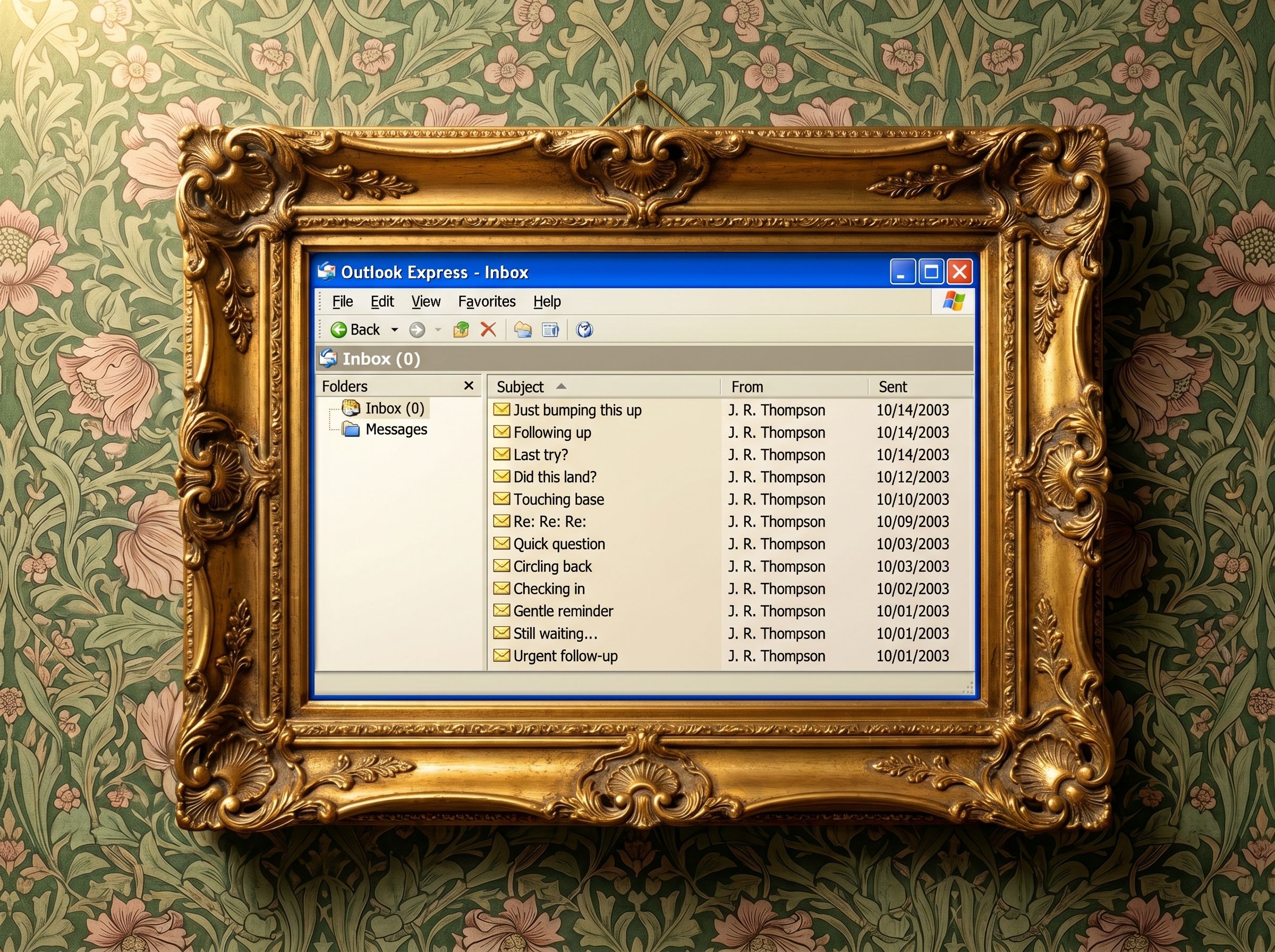
The customer you can't stop telling stories about is the one your sales deck pretends doesn't exist. Meet Hugo - your TRUE MVP.
You're at dinner with a founder friend. Three drinks in, they ask the question everyone asks: 'So who's your customer?' You deliver the official answer. Then they ask, 'No, like — who's your best customer?' Without thinking, you say Marcus. You light up describing him, because describing him is easy. Then you catch yourself and say 'obviously, he's an outlier, the actual ICP is Series A SaaS, fifty to two hundred employees...' and trail off.
2% to 11%
One founder narrowed their ICP from 'all SaaS companies' to 'Series B SaaS companies using Salesforce with 50-200 employees.' Reply rates went from 2% to 11%. Same product. Same message. Different definition of who it was for.
Source: r/SaaS case study
If your ICP takes more than one sentence to say out loud, it's not an ICP yet. It's a wish list.
You're emailing everyone. Which means you're saying nothing to anyone.
The average technical founder defines their ICP as "SaaS companies" or "B2B tech startups" or, on a good day, "mid-market companies in the $10M-$100M revenue range." Then they wonder why their conversion rates look like rounding errors.
That's what an ICP actually does. It's not an exercise in market research. It's a constraint that makes everything else work.
What "ideal customer profile" actually means
An ICP is a description of the company most likely to become your best customer - highest conversion probability, lowest churn rate, highest referral potential. In B2B SaaS, that's almost always a firmographic description, not a demographic one.
Your ICP is not a buyer persona. A persona describes a person (job title, motivations, objections). An ICP describes a company (industry, size, tech stack, growth stage, budget range). They're different tools. Both matter. Start with ICP. (Almost every founder gets this backwards at least once, so you're in good company.)
The mistake most founders make is building the ICP after the persona. They decide they're selling to "VP of Sales who cares about pipeline visibility" before they've defined what kind of company that VP works at. The result is a persona floating in midair, disconnected from any qualifier that would actually help you find them.
The research on this is consistent: successful founders land on approximately three attributes to describe their ICP. Fewer is too broad to be useful; more is too narrow to scale from. Mathilde Collin, co-founder of Front, said in Lenny Rachitsky's interview series that not defining the ICP early was her biggest mistake. Her language is worth quoting: "We did not think about ICP. I wish we did earlier on."
Not sure if your ICP is what's breaking your pipeline?
Eight questions - five minutes. Know what's actually broken in your GTM.
Run the free self-assessmentThe 3-Attribute ICP Test
Pick one firmographic qualifier per axis - who they are, what they use, where they are in their journey. If you can't get to three total, you're not specific enough yet. If you need four, two of them are probably the same thing.
The three attributes sit on three axes:
Structural qualifier - the thing about the company that makes your problem exist. Industry, company size, revenue range, funding stage, team composition. This is not "has the problem in theory." It's "has the problem structurally, by virtue of what they are." Example: "Series B SaaS company" is a structural qualifier. It tells you something about budget, team size, pressure from the board, and how much the commercial layer matters at this exact moment.
Behavioral qualifier - the thing they're already doing that signals readiness. Tech stack, tools used, behaviors observed. Not what they might do. What they're already doing. Example: "using Salesforce" is a behavioral qualifier. If your product integrates with, replaces, or augments Salesforce, this one attribute halves your work and doubles your conversion rate.
Moment qualifier - where they are in a specific journey. Growth stage, trigger event, hiring behavior, funding milestone. Something that tells you when they need you, not just whether they could need you. Example: "50-200 employees" as a band defines a specific operational moment - past product-market fit, not yet mature commercial infrastructure. That's when the lever your product pulls becomes urgent.
Three attributes. One sentence. "Series B SaaS companies using Salesforce with 50-200 employees." Say it out loud. You either know exactly who that is, or you're back to the drawing board.
ICP vs. ECP: why your first customers are a clue, not a definition
Your first customers are your Early Customer Profile (ECP) - the people who'll put up with your rough edges, give you honest feedback, and pay you anyway. They're not necessarily your forever ICP.
The distinction matters because founders confuse the two constantly. The ECP is the company willing to buy from you right now, with your current product, at your current maturity level. The ICP is the company you're optimizing the whole commercial layer around for the next three years.
Your ECP needs four things: a burning pain, willingness to pay for a partial solution, reference potential, and reachability. Your ICP needs all four plus: a repeatable sales path, low support overhead, and expansion potential.
The best outcome is that your ECP and ICP overlap completely. That happens. But if your first ten customers are all exceptions - "we made a deal for them," "they were referrals from my previous job," "they needed heavy customization" - they might be ECP without being ICP.
The test: if you had to find ten more companies just like this one, could you? If the answer is "not really, they were a special case," you haven't found your ICP yet.
What happens to your pipeline when the ICP is too broad
A broad ICP creates a messaging problem that looks like a sales problem. You don't fix it by closing harder; you fix it by narrowing.
When you sell to a mix of SMBs and enterprise companies, SMBs tell you your product is "too expensive" and enterprise prospects call it "cheap." Both are right, and neither is useful. The more you sell outside your real ICP, the muddier your commercial layer becomes.
This is what one founder described in a case study widely shared across Reddit and Indie Hackers: "We sold to a mix of SMBs and large enterprises. SMBs told us our platform was 'too expensive' while enterprise prospects thought it was 'cheap.' The more we sold outside our true ICP, the muddier everything became."
A broad ICP produces:
- messaging that tries to say everything and resonates with no one
- pricing that satisfies no segment completely
- customer success conversations that differ so wildly you can't systematize them
- churn from customers who were never the right fit in the first place
All four of those are messaging problems wearing different masks. The scarcity mindset drives this. Founders fear turning away revenue, so they chase every opportunity. The irony is that every wrong-fit customer you close costs you three right-fit customers you didn't have time to find.
How to pressure-test your ICP definition
A good ICP passes three tests: you can build a list of 500 of them without guessing; your best existing customers fit it; your worst-fit churned customers don't.
Before you build a campaign, outreach sequence, or content strategy around an ICP, run these three checks:
The list test. Can you pull a list of 500 companies matching your ICP from Apollo, LinkedIn, or a data provider? If not, the ICP is either too broad (too many results) or too narrow (no results). "Series B SaaS with Salesforce, 50-200 employees" returns a workable list. "SaaS companies" returns 40,000.
The reverse-fit test. Take your three best customers - highest NPS, lowest support overhead, longest tenure. Do they match your ICP? If two out of three are outliers, your ICP is describing a theory, not a pattern.
The churn test. Take your three worst customers - highest churn rate, most support tickets, lowest expansion. Do they fall outside your ICP? If they do, you've got evidence. If they don't, the problem is elsewhere.
The 3-Attribute ICP Test in practice
Here's the exercise, start to finish. It takes 30 minutes if you have your customer data in front of you.
List your ten best customers (by LTV, NPS, or renewal rate).
What do they have in common structurally? Look for company size, industry, funding stage, and team composition. That's your structural qualifier.
PT10M
What tool or behavior do your best customers share that your worst customers don't?
That's your behavioral qualifier.
PT5M
What were your best customers trying to do, or what had just happened, when they found you?
That's your moment qualifier.
PT5M
Combine them into one sentence.
Say it out loud. If it sounds like something you could search on Apollo, you're done. If it sounds like a slide deck (and you'll know when it does), start again.
PT10M
One sentence. Three attributes. That's the ICP.
Frequently asked questions
What is the difference between an ICP and a buyer persona?
An ICP describes the company you're selling to - firmographics like industry, size, and tech stack. A buyer persona describes the person within that company - their job title, motivations, and objections. You need both, but your ICP comes first. A persona without an ICP is a character in search of a stage.
How specific should a B2B SaaS ICP be?
Specific enough that you could build a named list of 500 companies matching the definition without guessing. Too vague and you're describing a market, not a customer. The research from Lenny Rachitsky's founder interviews consistently points to three attributes as the right level of precision.
What is an Early Customer Profile (ECP)?
The ECP describes the companies most likely to buy from you now, with your current product and maturity level. They'll tolerate rough edges, give you honest feedback, and pay you anyway. The ECP and ICP often overlap, but not always. If your first customers all required special deals or heavy customization, they're ECP without being ICP.
How do I know if my ICP is too broad?
If you can't complete the sentence in under 20 words, it's too broad. If a list built to the ICP returns more than 5,000 companies, it's too broad. If your messaging tries to speak to more than one structural context at once, your ICP is too broad and your messaging is paying the price.
Can an ICP change over time?
Yes, and it should. The ECP-to-ICP evolution is natural. Your Series A ICP might be 'scrappy B2B SaaS with a product-led motion.' Your Series B ICP might be 'enterprise SaaS with a dedicated CS team.' The commercial layer should be updated when the ICP shifts, not six months after.