A 1m+ SKU marketplace from concept to launch
Built for private clients ahead of the public marketplace
TL;DR
Tincture led Product and Operations for an early-stage US/UK jewellery business's 1m+ SKU lab-grown diamond marketplace, building the entire commercial and operational backbone from zero across multiple PRD iterations. The marketplace consolidates two vendor APIs into a single live-inventory results page, layered with a Custom GPT CAD generator, an Ideal Diamond finder, and a Reddit-driven market intelligence engine. Built for private clients ahead of the public marketplace, on infrastructure designed for scale rather than launch.
The brief
What did the client need?
The client was an early-stage US/UK lab-grown diamond and precision-cut gemstone business, co-founded out of the Reddit lab-grown diamond community. There was no infrastructure, no processes, no tooling, and no team beyond the two founders. The brief was the most ambitious version of the brief: build everything from zero across product, operations, finance, compliance, and go-to-market, while simultaneously serving private clients and preparing for a public marketplace launch.
The marketplace specifically had a sharper question buried inside the build. Most loose-diamond retailers give customers access to one vendor's inventory, which is a structural ceiling on the buying experience and a quiet competitive advantage for whoever breaks it first. The client needed not just a competitive marketplace but a market-leading one, which meant solving the multi-vendor inventory problem before any other DTC lab-grown diamond brand had bothered (in 2025 that was still a surprisingly easy bar to clear).
The other constraint, which mattered as much as the technical brief, was credibility. The client was launching into a regulated, high-trust category with high-value orders. The private-client experience had to be in place while the public marketplace was still being built. There was no patience for a six-month build cycle that didn't ship anything sellable along the way.
The constraints
What made this hard?
Three structural constraints. The first was vendor inventory. The two leading wholesale loose-diamond APIs in this category don't talk to each other. Pulling both into a single results page required unifying two different schemas, two different image conventions, two different pricing structures, and two different stock-update cadences, then deduping where the same physical stone showed up twice. Most retailers picked one and stopped there because it was easier.
The second was the bespoke layer. A loose diamond is a SKU; a bespoke ring with a hand-set diamond is a multi-week project with CAD iterations, customer approvals, vendor coordination, and hallmarking. The same platform had to handle both, and the operational system had to switch modes without the customer seeing the seam.
The third was budget. Two co-founders, bootstrapped, no enterprise software, no agency. Every architectural decision had to either run on tools the team already paid for or pay for itself in months. The dual-API marketplace specifically had to be built without commissioning custom integrations from each vendor.
The approach
How was the problem framed?
Treat the marketplace as a single live-inventory product, not a federation of vendor catalogues. The architectural rule was that the customer should never have to know which vendor a stone came from; they should see one cohesive marketplace, with one set of filters, one results page, and one checkout flow.
The dual-API integration was the centerpiece. We called both APIs in parallel, normalized the response schemas into a single canonical shape, and combined the results with deduplication logic that handled cases where the same stone appeared in both inventories. The result was an experience that competitors couldn't match without rebuilding their own integration layer.
The AI tooling layer was the other strategic move. Instead of treating AI as a future-of-the-business roadmap item, we built three production tools into the marketplace from the start: a Custom GPT CAD generator that turned structured JSON spec inputs into concept sketches, technical drawings, and CAD-grade renders; an Ideal Diamond finder that filtered the marketplace to mathematically-ideal-proportion stones; and a Reddit Scraper plus market intelligence analyser that monitored five lab-grown diamond subreddits weekly for vendor mentions, pricing signals, and emerging trends. AI was a working layer of the product, not a press release.
The build
What was shipped?
A complete marketplace product across three PRD iterations: customer portal, vendor tools, internal dashboards, and a unified checkout and payment flow. A dual-API integration consolidating the two leading wholesale diamond inventory APIs into one live-inventory results page, with normalized schemas, image handling, pricing, and dedup logic.
The Custom GPT CAD generator: structured JSON spec inputs (collected via Fillout forms) feeding three rendering modes (concept, technical, CAD-grade), each with a two-step summary-then-render flow, applying a Customization Library so output matched the brand's design grammar.
The Ideal Diamond finder: an admin-curated specification layer (depth %, pavilion angle, table %) that filtered the marketplace down to the mathematically-ideal stones, giving customers a "we'll only show you the ones that are right" experience instead of a 1m+ wall of options.
The Reddit Scraper plus market intelligence analyser: Python, PRAW, Supabase, ChatGPT API, and GitHub Actions monitoring five lab-grown diamond subreddits, surfacing vendor mentions, pricing trends, and emerging product signals on a weekly cadence.
End-to-end operational systems for the order lifecycle: customer enquiry, RFQ, vendor tendering, pricing, payment, production, quality control, hallmarking, cross-border customs, and delivery. Automation-first finance with invoice ingestion, OCR processing, categorization, approval routing, and real-time P&L. Brand guidelines, investor-ready materials, and a Reddit-led launch community built in parallel.
The outcome
What were the results?
Built for private clients ahead of the public marketplace. The infrastructure was designed for scale well beyond the private-client phase: dual-API marketplace, AI tooling, automation-first ops. Every system shipped was load-bearing for the next stage, not scaffolding to be replaced.
The dual-API marketplace held. Most competitors still ship a single-vendor catalogue with vendor branding intact; the client's marketplace shipped as one cohesive results page from day one. The customer experience compressed what should have been a multi-tab comparison exercise into a single search.
The AI tooling layer earned its keep. The Custom GPT CAD generator removed the design-for-quote bottleneck that traditionally requires a CAD designer per iteration. The Ideal Diamond finder turned a 1m+ SKU surface into a curated short list. The Reddit market intelligence engine fed weekly pricing and competitive signals back into commercial decisions without anybody manually scrolling threads.
What it took
What tools and methods were used?
Custom backend integrations against the two leading wholesale diamond inventory APIs, with normalized data layers and dedup logic. Custom GPT (OpenAI) for the CAD generator, fed by Fillout forms producing structured JSON. Python, PRAW, Supabase, ChatGPT API, and GitHub Actions for the Reddit market intelligence engine. Automation across invoice ingestion, OCR, approval routing, and Google Sheets P&L. Brand guidelines, investor-ready materials, and the underlying Notion ops backbone.
The methodological move: build the product layer and the AI tooling layer at the same time. Most early-stage marketplaces ship a thin product first, then bolt AI on as a roadmap item. This marketplace shipped with three production AI tools live at launch because they were treated as core, not extensions.
The other move worth naming: solve the structural competitor moat early. The dual-API marketplace was harder to build than a single-vendor catalogue, which is precisely why it's a moat. The client locked in a buying experience competitors couldn't replicate without redoing their integration architecture.
The takeaway
What's the transferable principle?
Most early-stage marketplaces underbuild their structural advantages in pursuit of speed-to-launch. They ship the version that's easiest to build, then watch as later entrants ship the version that's actually differentiated. The work that lands does the inverse: identify the structural moat in the buying experience first, build that into the launch architecture, and ship slower private revenue while the moat holds.
For this client, the moat was the dual-API marketplace and the AI tooling layer wrapped around it. For someone else's marketplace, the moat is wherever the customer's actual friction lives: pricing transparency, supplier coverage, configuration speed. Pick the structural one before you commit to the build.
The other principle, which AI specifically bends: AI tools shouldn't be a roadmap item. The Custom GPT CAD generator and the Reddit market intelligence engine were production from week one. Treating AI as a marketing layer is how marketplaces fall behind. Treating AI as core build work is how they get ahead.
Frequently asked questions

More like this

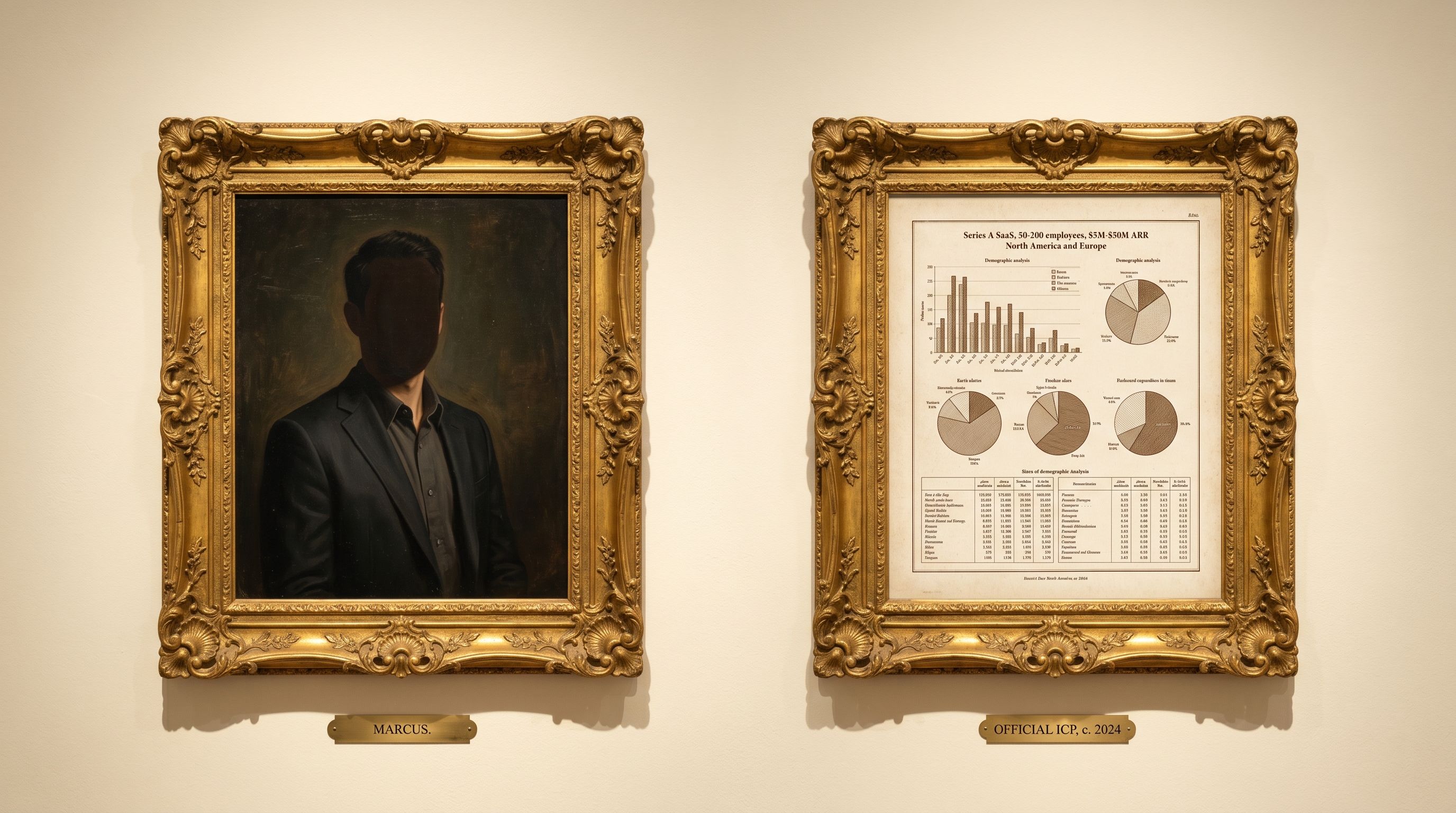
An SEO + GEO content engine encoded into a Custom GPT, producing dual-optimized tone of voice-tuned articles by default
A dual SEO + GEO content engine for the post-Google search era
We designed and built the dual-optimization content engine an early-stage US/UK jewellery business used to rank on Google AND get cited by ChatGPT, Perplexity, and Gemini, encoded into a Custom GPT that produces education content pre-optimized for both surfaces, with proprietary insight frameworks designed as citation magnets and a 17-point checklist that ships with every article. The strategy was an early-mover bet on Generative Engine Optimization at a moment when most e-commerce SEO was still optimizing for Google alone, and now serves as a reusable template, now using Claude Skills, for any brand operating in an AI-mediated discovery environment.
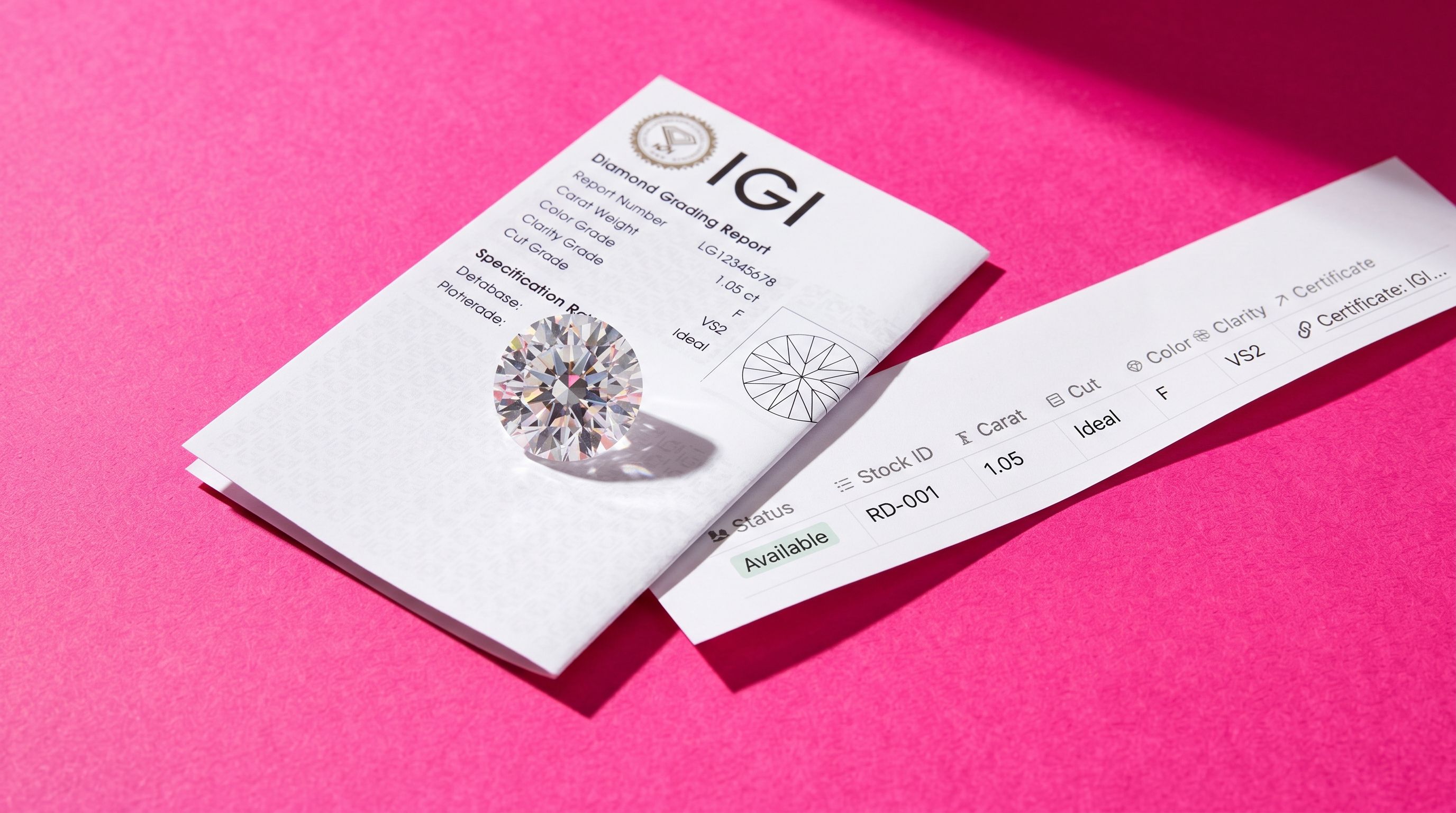
A multi-database operating system replacing six tools, running an entire UK/US jewelry business.
A multi-database Notion operating system for a UK/US jewelry business
We designed and built the operating system an early-stage US/UK jewellery business ran on, an interconnected Notion workspace covering inventory, diamonds, CRM, finance, purchase orders, customer portal, and cross-timezone coordination, with automation layered through Relay.app, custom OCR pipelines, custom automations, and Supabase edge functions. The build replaced what would normally be a stack of expensive enterprise tools with a single workspace tuned to the specific shape of a two-founder, US/UK, made-to-order jewellery business.
Want a marketplace with structural moat from launch?
We co-found and build the product and operational backbones for early-stage marketplaces with structural advantage built in.